


Our Resilience Imperative
Context Layer
A C-Suite Strategy to End the Ecological Ponzi Scheme
The Pyramid Scheme: The Risk of False Accounting
In a world defined by biophysical limits, competitive advantage belongs to those who understand that the economy is a subsystem of the biosphere. Under the leadership of Mathis Wackernagel (co-creator of the Ecological Footprint) and the strategic direction of Green Cross UK, we are driving a transition based on data, not assumptions.
Sustainability is a complex, multidimensional, and multidisciplinary system that defines the operational viability of every public or private organisation.
The global economy currently operates as a Ponzi structure. We are funding today’s growth by systematically liquidating the natural capital of the future.
Consuming Capital: We are not living on nature’s “interest” (regenerated resources), but devouring the capital itself—fertile soils, biodiversity, and carbon absorption capacity.
Invisible Ecological Debt: As in a financial pyramid, collapse occurs when demand exceeds the inflow of new resources.
Price Failure: Today’s markets suffer from severe myopia; prices do not reflect the true cost of ecological destruction, creating an asset bubble destined to burst.
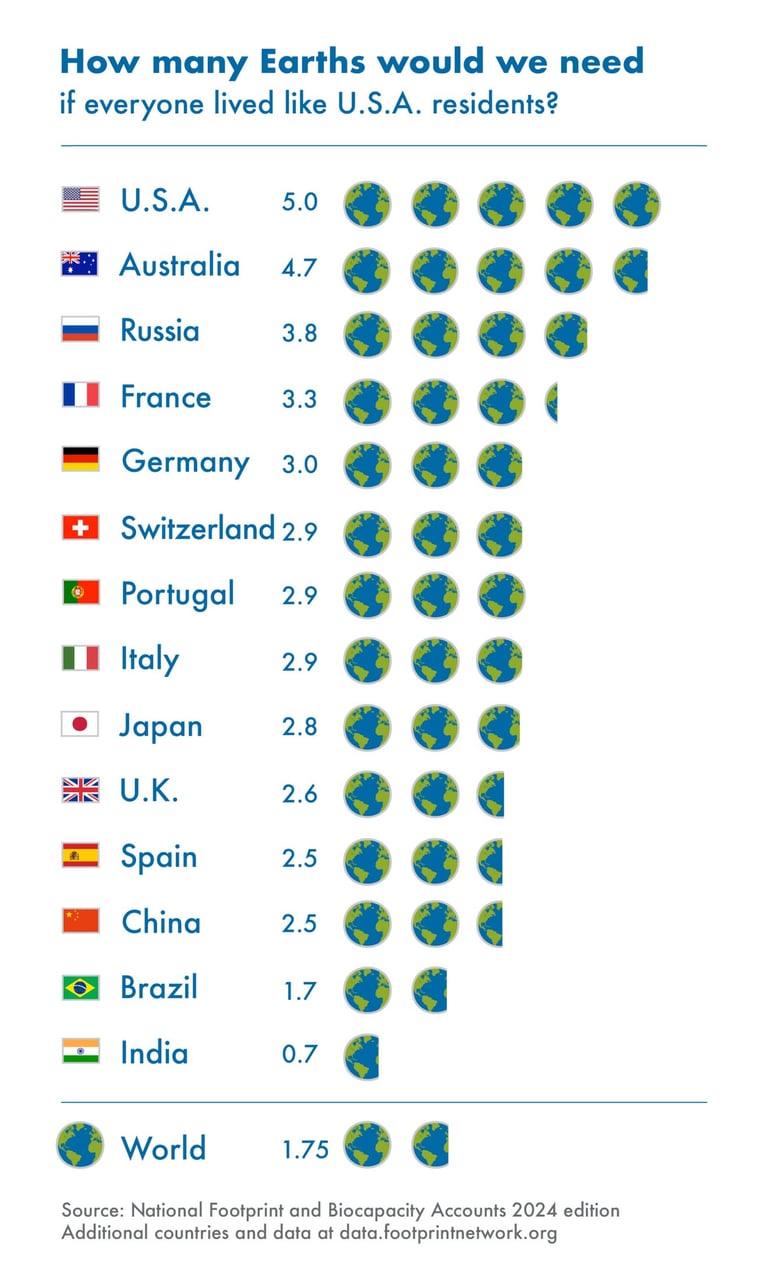
Ecological Footprint & ESG Metrics: Beyond Carbon
For Green Cross, the Ecological Footprint is one of the master indicator for ESG (Environmental, Social, and Governance) criteria. While many metrics focus solely on emissions, the Footprint measures total human demand on ecosystem services.
Solvency Proxy: The Ecological Footprint compares the demand of a company or country against available Biocapacity (nature’s supply).
Food & Energy Security: The current system is inefficient—for example, in Spain, it takes 8 calories of fossil fuel to produce just 1 calorie of bread.
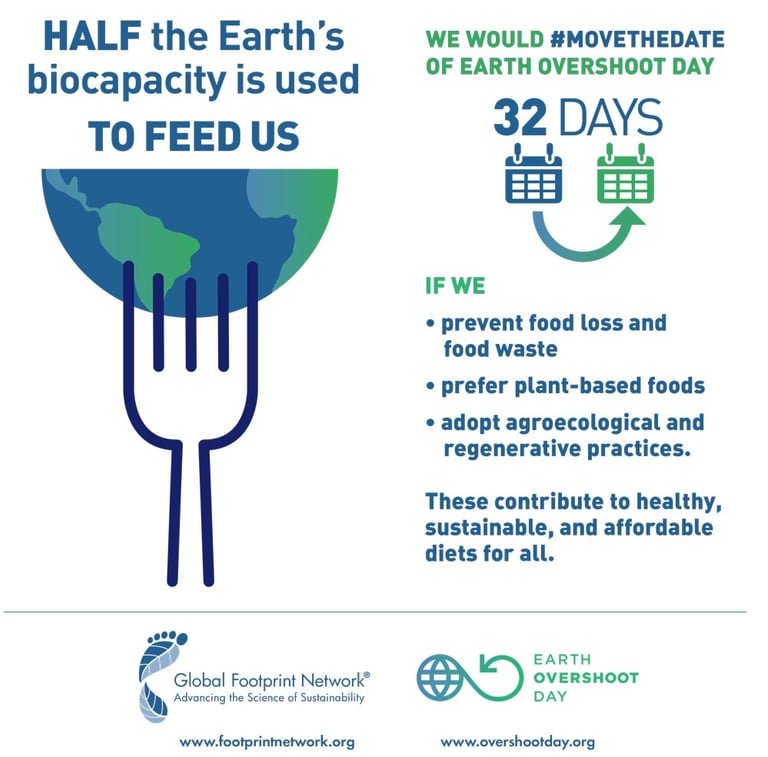
Integrated Risk Management: Currently, 50% of the planet’s biocapacity is used just to feed us. Ignoring this metric in sustainability reporting is like managing blindly in a context of growing scarcity.
Earth Overshoot: Defining Our Planetary Budget
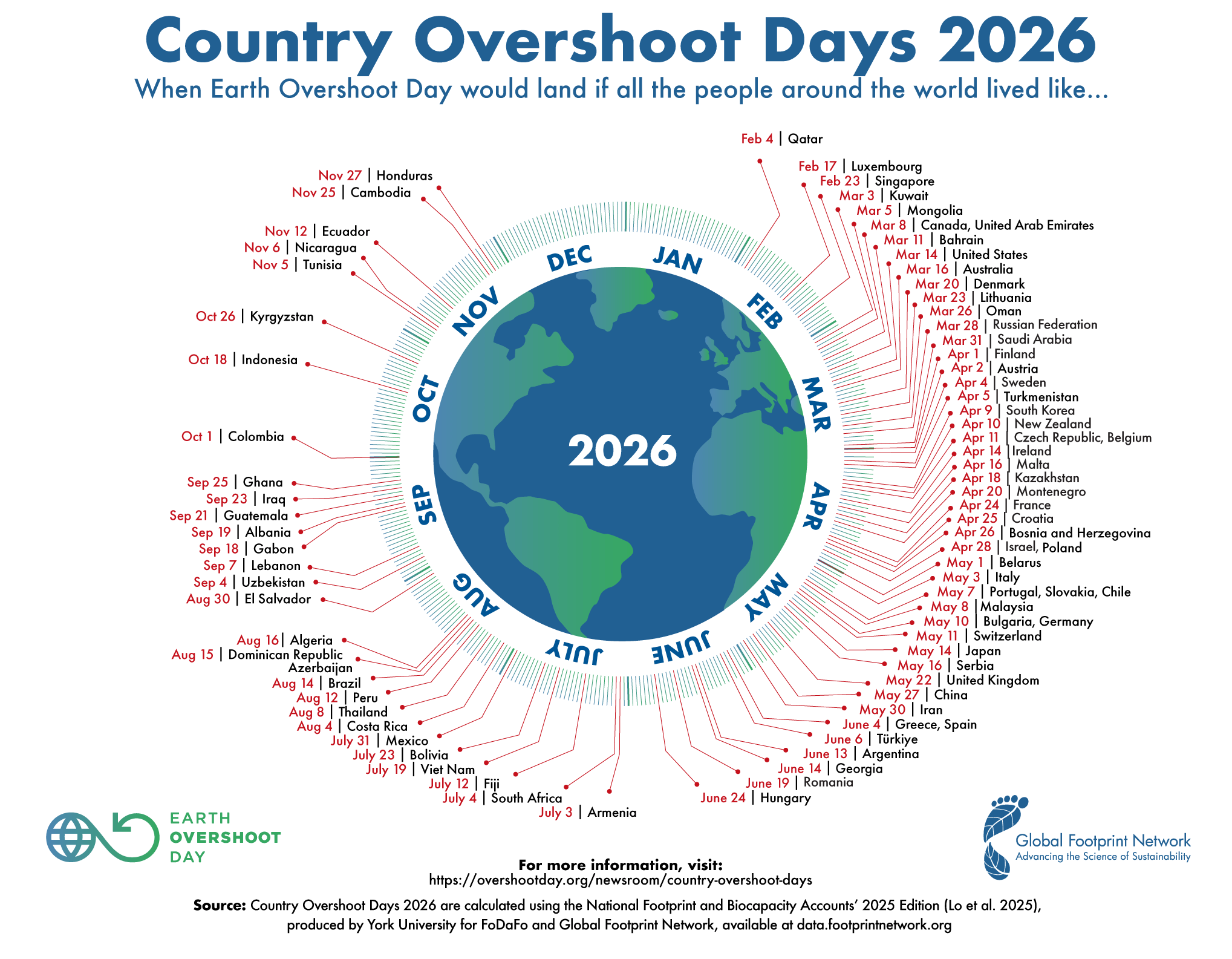
Earth Overshoot Day is the pivotal annual milestone that marks the date when humanity’s demand for ecological resources and services in a given year exceeds what the Earth can regenerate in that same year. It is not a metaphorical concept, but a science-based metric that quantifies our ecological balance sheet—or more accurately, our imbalance.
The Core Definition:
At its essence, Earth Overshoot measures the gap between human demand and planetary regeneration. Think of it as an audit of our collective bio-physical economy.
Demand is humanity's Ecological Footprint: the total area required to produce the renewable resources we consume (food, timber, fibres) and to absorb our waste, most notably carbon emissions from fossil fuels.
Regeneration is the planet's Biocapacity: the productive area—forests, grazing lands, cropland and fishing grounds—that can regenerate resources and absorb waste.
When our annual demand surpasses annual regeneration, we create an ecological deficit. We are essentially drawing down the planet's natural capital reserves, depleting stocks of resources and overfilling waste sinks like the atmosphere with CO₂. This deficit is the Overshoot.
Why This Metric Matters for Strategic Leadership:
For the C-Suite and policymakers, understanding Overshoot is critical because it reframes sustainability from a vague ambition into a material accounting issue. It reveals that key economic risks—supply chain instability, volatile commodity prices, climate disruption—are fundamentally rooted in this ecological deficit. It moves the conversation beyond mere carbon emissions to the broader systemic pressure our economies place on all natural systems.
Managing this deficit is the central challenge for long-term organisational and economic resilience. The #MoveTheDate mission provides the actionable framework for this management.
#MoveTheDate: The Strategic Framework for Systemic Change
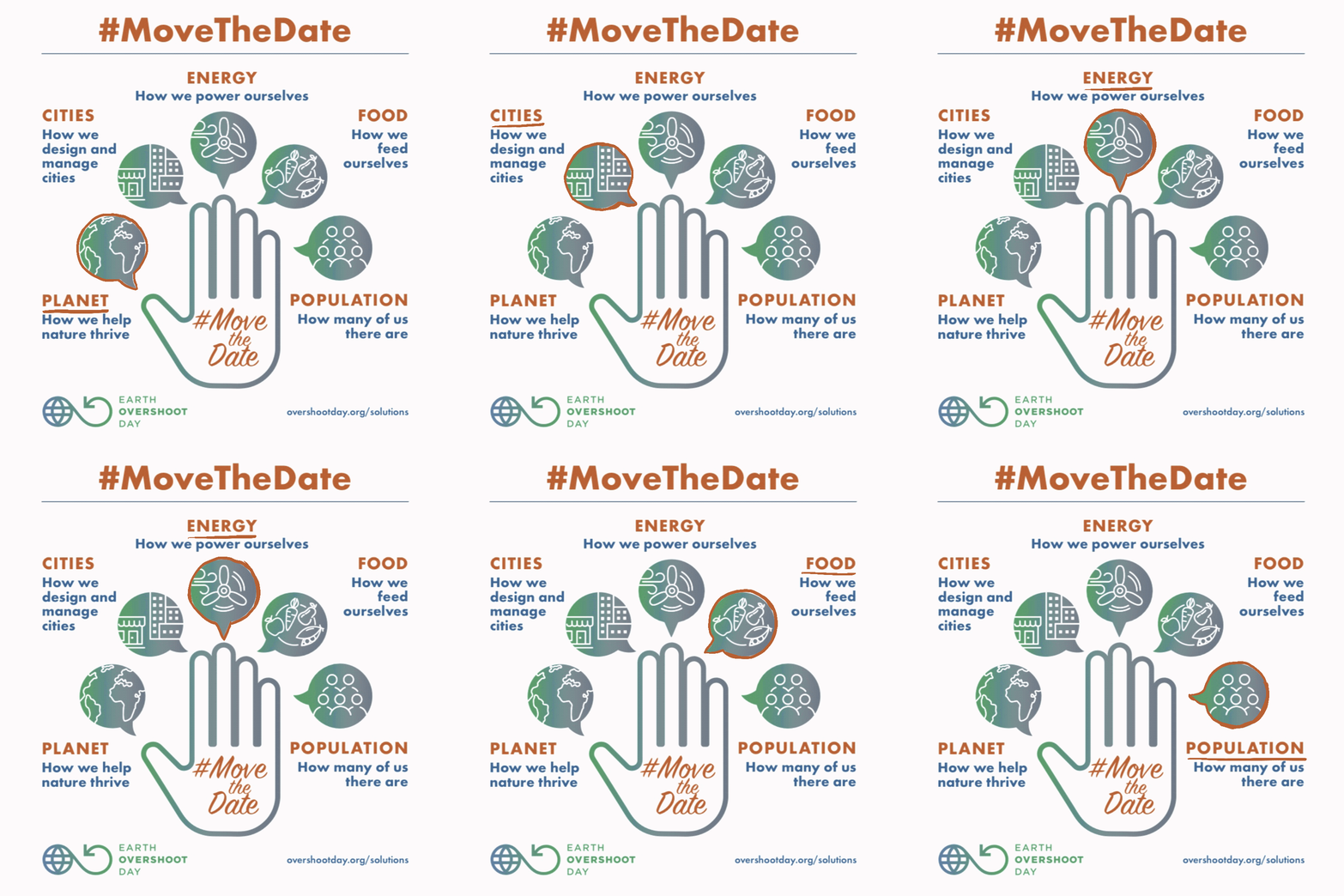
Moving the date of Earth Overshoot Day is the ultimate operational goal for a sustainable global economy. Green Cross UK aligns its strategy with the solutions pillars established by the Global Footprint Network, focusing on five key levers for systemic transformation:
PLANET (Helping Nature Thrive): Enhancing the planet's Biocapacity through large-scale ecosystem restoration, conservation, and regenerative practices that allow natural systems to rebound and produce more.
CITIES (How We Design Them): Transitioning to compact, resource-efficient urban models with regenerative infrastructure, reducing the ecological footprint per capita of our built environments.
ENERGY (How We Power Ourselves): Accelerating the shift to a 100% renewable energy matrix and pursuing radical energy efficiency to eliminate the carbon footprint, the largest single component of Overshoot.
FOOD (How We Feed Ourselves): Transforming agricultural systems towards regenerative practices, significantly reducing food waste, and shifting dietary patterns to lower the immense land and resource footprint of our food system.
POPULATION (How Many of Us There Are & Our Consumption Patterns): Addressing the scale of demand through empowerment, education, and the development of new models of prosperity that deliver wellbeing within planetary boundaries.
This integrated framework offers a clear roadmap for organisations seeking to transition from being part of the deficit problem to becoming architects of regeneration.
Is your organisation contributing to the Overshoot?
We invite you to assess your impact and collaborate on implementing tangible, systemic solutions.


WHERE TO FIND US:
Registered Office: 7 Bell Yard, London, WC2A 2JR, United Kingdom
Switchboard: +44 (0) 330 818 7382
Email: joinus@green-cross.org.uk


Member of Green Cross International | Founded by Mikhail Gorbachev in 1993
© 2026 Green Cross United Kingdom. All rights reserved.


Signatory of: