
VITALES
Restoring 1,750 Hectares of Lake Titicaca
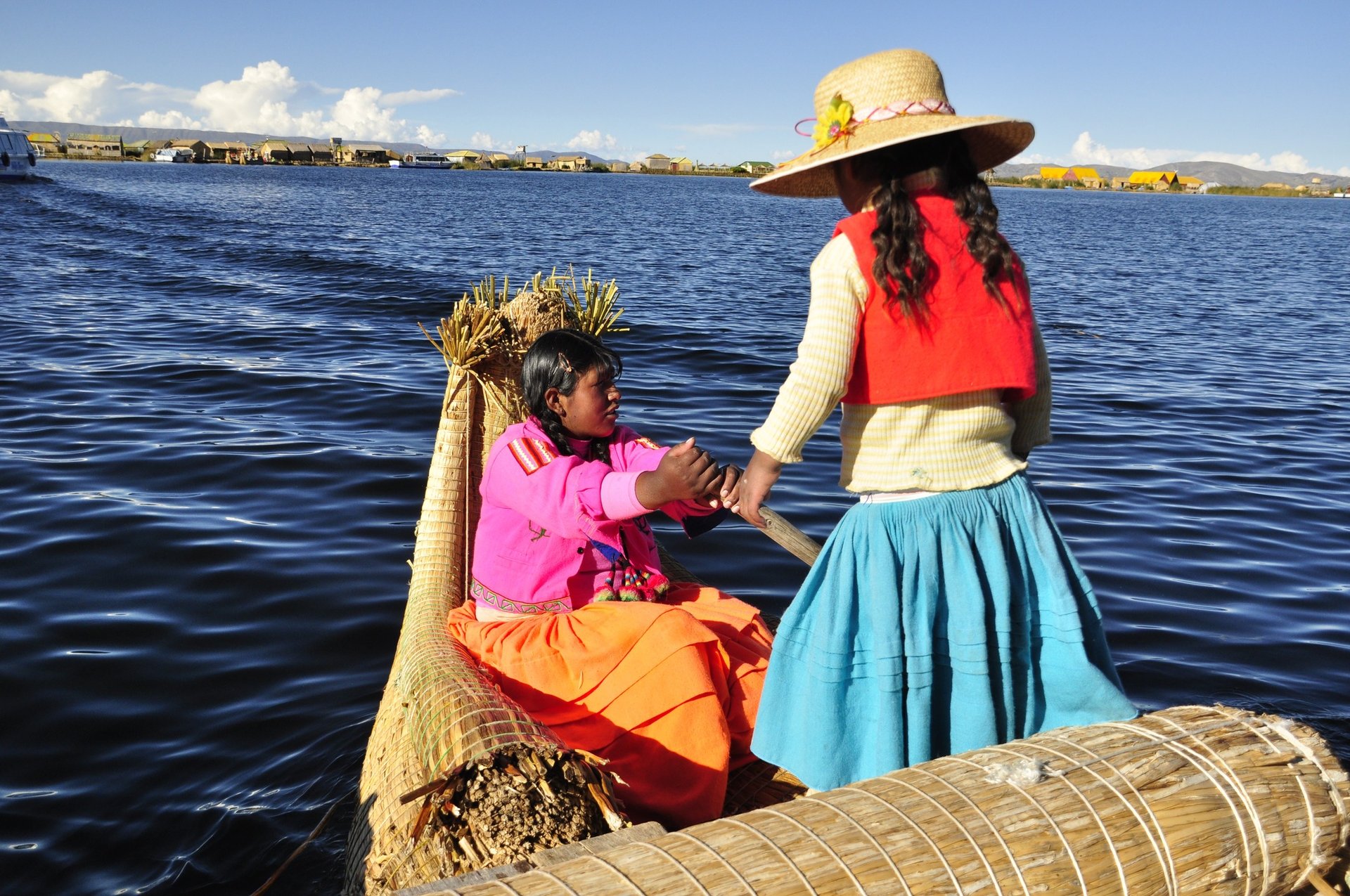
Safeguarding the 3,500-Year Legacy of the Uros - Guardians of the Lake
VITALES addresses the accelerating ecological degradation of Lake Titicaca through field-proven sanitation technology, financed by a portfolio of independently verified sustainable assets — structured off-balance sheet, preserving full sovereign fiscal capacity — under the governance authority of the Binational Authority (ALT) and in co-creation with its communities.

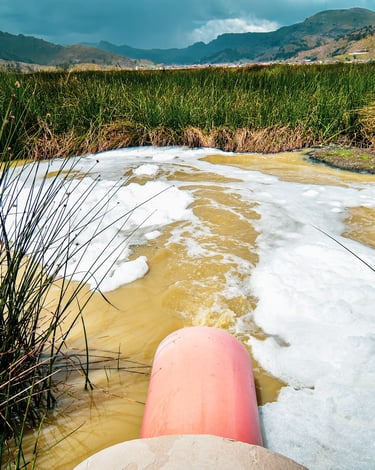
The Challenge: A Crisis with a documented threshold
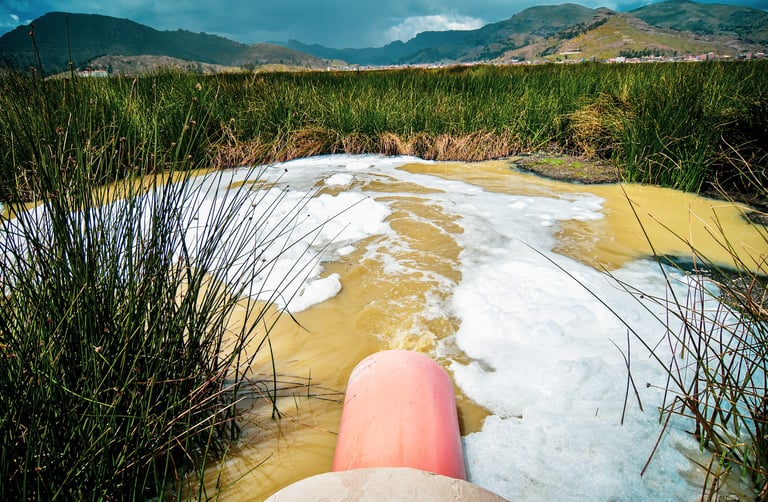
Lake Titicaca — the world's highest navigable lake and the ecological and cultural heart of the Andes — is approaching a point of non-linear deterioration. The Inner Bay of Puno, its most critically affected zone, has accumulated decades of untreated effluent, agricultural runoff, and urban discharge that have degraded water quality, suppressed endemic biodiversity, and compromised the health of surrounding communities.
Scientists and conservation bodies document accelerating eutrophication trajectories. The window for reversible intervention is open — but it is not indefinitely so.
1. Regional Economic Pillar
Tourism, artisanal fishing, and agriculture sustaining over two million people in the TDPS basin depend on the lake's ecological function.
More Biodiversity
Triple Impact: Measurable Outcomes
More Biodiversity for More Climate Resilience.






Understanding VITALES,
The Complete Picture


The Solution: Sanitation that generates its own financial sustainability
VITALES (Vitality · Innovation · Titicaca · Water · Lake · Ecosystem · Sanitation) adapts the systematic framework of the Lazarus Initiative to the specific ecological, cultural, and governance conditions of Lake Titicaca. It is co-designed with the ALT and local communities.
Its operational premise is verifiable: halting pollution allows ecosystems to recover; recovering ecosystems generate independently certified environmental value that finances the infrastructure sustaining the restoration over a 30-year horizon.
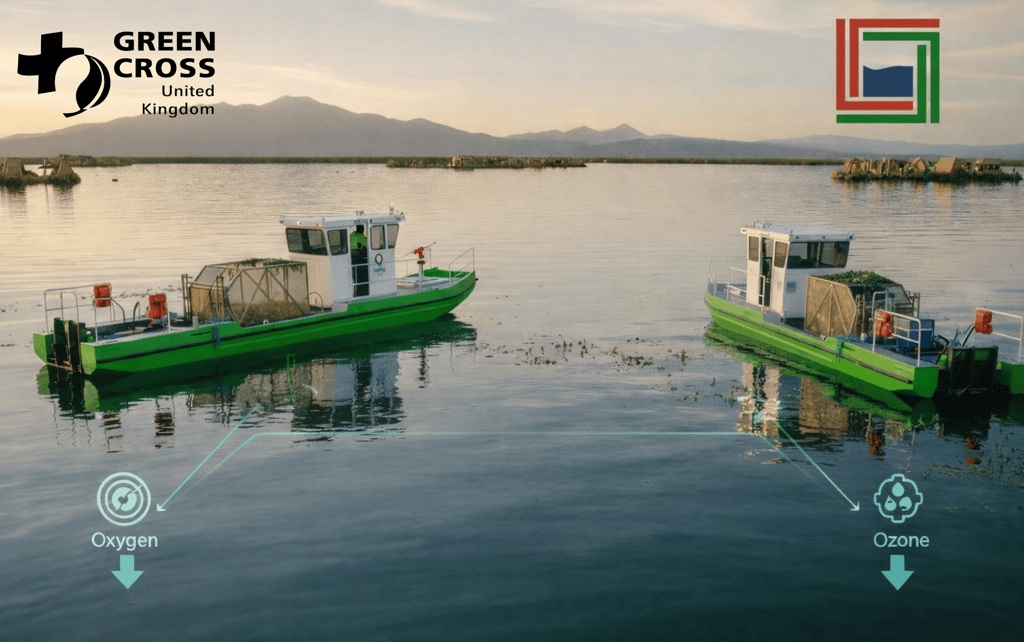
The Model in Action: How VITALES Works
WHAT — Proven Technology and Systematic Verification
We implement proven sanitation technology systematically under the Lazarus Initiative, specifically adapted for the altitude and conditions of Titicaca.
The project's long-term sustainability is built on the ENVISION framework (Institute for Sustainable Infrastructure, USA), which establishes the baseline for the mobile treatment infrastructure and defines sustainability performance across all phases.
The entire process is monitored by a robust, multi-layered system (methodologies, IoT sensors, environmental DNA, satellites, blockchain) guaranteeing traceability and irrefutable scientific results.
WHY — An Ethical and Practical Imperative
The question is not whether change is needed, but how to implement it while preserving and enhancing what already works: the rights of communities, the authority of the ALT, and the shared vision of a healthy lake for future generations.
HOW — A Framework for Co-Creation and Self-Sustainability
Self-Financing: Sustainable asset revenues cover long-term O&M (~USD 30M over 30 years), ensuring a self-sustaining system. If projected cash flow is not contractually secured, implementation does not begin.
Catalytic Investment: An initial ~USD 20M (CAPEX) in technology activates the full restoration cycle. All figures are indicative maximum estimates subject to independent financial modelling prior to any commitment.
Balanced Governance: Legal safeguards protect local sovereignty, community rights, investor conduct, and independent oversight. The financial structure is determined during the project finance phase based on specific context and highest applicable standards.
WHERE & WHEN — A Long-Term Commitment
Location: Inner Bay of Puno, Peru.
Scope: 1,750 hectares under restoration.
Horizon: 30-year phased commitment (validation, scaling, consolidation) for lasting impact.
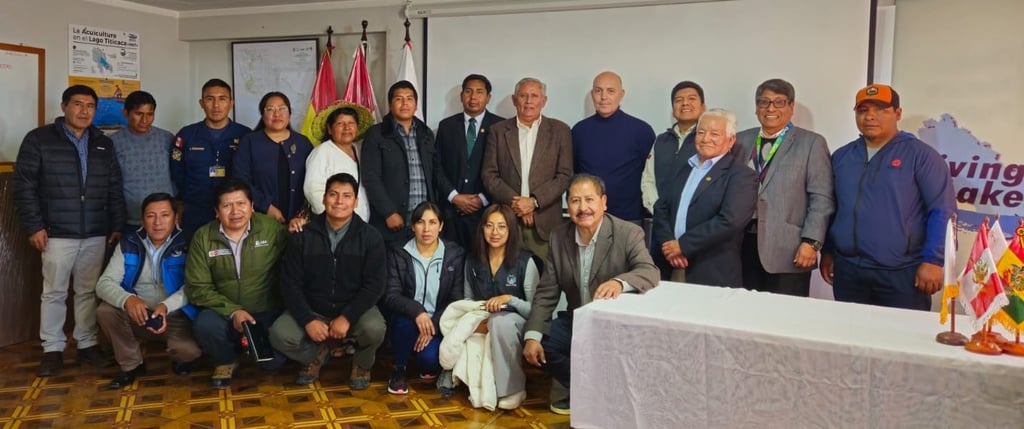
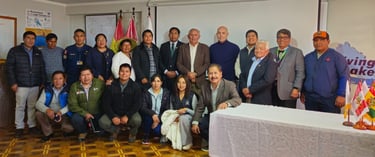
WHO — An Ecosystem of Allies
VITALES thrives on a genuine 'blue-green alliance' between all stakeholders:
Local Beneficiaries: The Uros and lakeside communities directly benefit from water sanitation and ecosystem restoration.
Binational Authority (ALT): Managed by Peru and Bolivia, the ALT oversees the TDPS system to control pollution, protect biodiversity, and drive transboundary sustainable development through the Global Master Plan.
Investment with Purpose: Resources come from actors seeking to generate tangible environmental and social impact, acquiring rights to verified instruments (ARBs), not to the territory, water, or its resources.
Role of the Facilitator - Green Cross UK: A neutral bridge ensuring integrity, traceability, and verifiable results under the highest global standards.


Key Guidelines for Trust and Verifiable Impact
To build a foundation of trust and credible results, VITALES operates under three fundamental technical pillars:
Proven Technology and Independent Verification: We implement sanitation systems with demonstrated efficacy, adapted to high-altitude lacustrine conditions. All environmental impact is measured, reported, and verified by an independent, world-class third party. Technology suppliers post performance bonds guaranteeing equipment efficacy.
Vertical Standards, Zero Double-Counting: We use for each ARB asset category is verified under its own domain-specific standard. Carbon with carbon methodologies. Water with water frameworks. Biodiversity with biodiversity protocols. No composite methodology mixes domains.
Total Traceability with Web3: We employ digital technology generates immutable traceability across all critical data — water quality, sensor readings, asset issuance, and verification records — building an auditable foundation of trust for all actors.




For Impact Investment: Strategic Value and Clear Returns
VITALES is structured as a project finance initiative with professional risk allocation. Financial return is generated by a diversified portfolio of independently verified sustainable assets. The target is not any investor — it is entities for whom verified alignment with freshwater sanitation and biodiversity restoration is a structural requirement.
Sector Benchmarks — Third-party studies, not VITALES projections
The following figures are drawn from named third-party studies and sector indices. They describe observed outcomes within the broader category of verified impact investment — they are not projections, guarantees, or commitments specific to VITALES.
+20–30% brand value: Observed uplift for sustainability-verified corporates. | Brand Finance Global Intangible Finance Tracker.
+8–12 NPS points: Differential among sustainability-aligned consumer-facing firms. | Compiled sector NPS benchmarking studies.
+25% tender success: Higher bid success rate in ESG-weighted procurement. |Climate Bonds Initiative — Green Finance State of the Market.
1–2 ESG rating notch: Improvement range from verified, independently audited impact projects. Facilitates CSRD and TNFD compliance. | MSCI ESG Research.
60–80% reputational risk reduction: For industries with documented environmental footprint engaging in verified restoration. | Compiled ESG sector analysis
25–40% talent turnover reduction: Observed at firms with verified sustainability commitments.| MIT Sloan Management Review.


VITALES at a Glance
Aims to restore 1,750 hectares in Lake Titicaca's Bay of Puno
Converts ecosystem restoration into verified Assets for Restoring Biodiversity (ARBs)
Seeks to ensure clean water and restored endemic biodiversity.
Protects the 3,500-year cultural legacy of the Uros communities.
Operates via co-creation and collaboration with the ALT, governments, and local communities.
Uses independent verification and Web3 for transparent, trusted results.
Offers impact investment strategic value and intangible value beyond financial return.


Ready to Co-Create the Future of Titicaca?
This is not Green Cross UK's programme for Titicaca. It is Titicaca's programme, and we are here to facilitate building it, together.
VITALES demonstrates that it is possible to reverse the water crisis through collaborative innovation, transforming the most pressing environmental challenge in the Andes into the foundation for truly sustainable development.
Ready to be part of this solution?
The lake is there. The community is ready. The technology is proven. Let's make it happen.


WHERE TO FIND US:
Registered Office: 7 Bell Yard, London, WC2A 2JR, United Kingdom
Switchboard: +44 (0) 330 818 7382
Email: joinus@green-cross.org.uk


Member of Green Cross International | Founded by Mikhail Gorbachev in 1993
© 2026 Green Cross United Kingdom. All rights reserved.


Signatory of: